
What is a Registered Design?
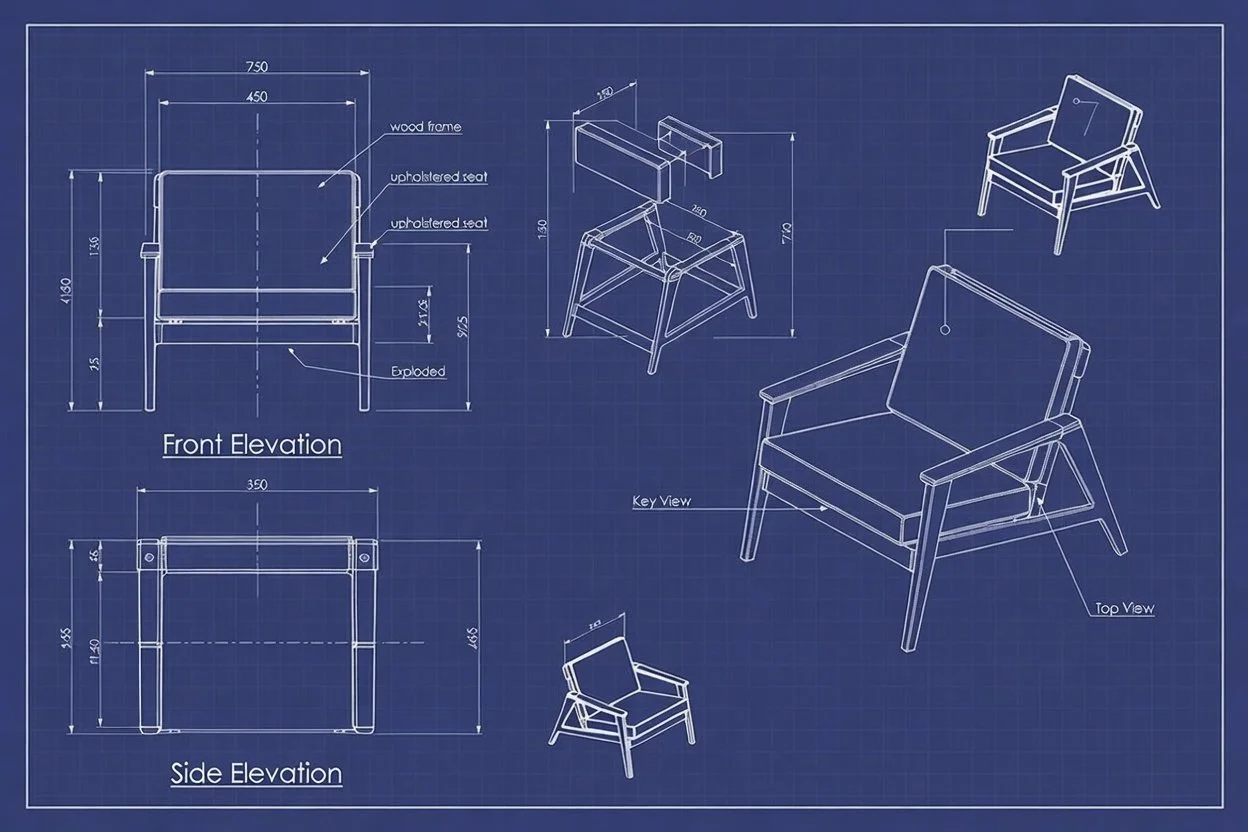
A registered design is a form of intellectual property right that protects the visual appearance of a product or part of a product. This includes features such as:
Shape and configuration
Lines, contours, and colours
Texture and materials
Ornamentation and surface decoration
In the UK, registered designs are governed by the Registered Designs Act 1949. To qualify for registration, a design must be:
New – It must not have been made available to the public anywhere in the world before the application date (subject to a 12-month grace period for the designer's own disclosures).
individual character – The overall impression it produces on an informed user must differ from the overall impression produced by any earlier design.
Importantly, registered designs protect the aesthetic appearance of a product, not its technical or functional features (which may instead be protectable by patents).
How Do You Register a Design?
To register a design, you will need to prepare images or representations of your product. These need to be clear and can be photos, line drawings or a CAD representation. Ensure that the design accurately represents your product and it is clear what you are trying to protect. You can register part of the product or all of it. There needs to be a clear strategy in deciding what to register and what not to register. We can assist in this process.
Once the representations are ready, you will need to prepare an application to the UK Intellectual Property Office. It is a cost-effective process and you can include up to 50 designs in a single application.
What Protection Does a Registered Design Provide?
A UK registered design grants the owner the exclusive right to use the design and to prevent others from using it without consent. Key features of this protection include:
Monopoly Right: Unlike copyright, a registered design gives a true monopoly. This means a third party can infringe even if they independently created a similar design without copying.
Duration: Protection lasts for an initial period of 5 years, renewable in 5-year increments up to a maximum of 25 years.
Geographic Scope: A UK registered design covers just the UK. You can also register designs internationally including across the EU.
Enforcement: The owner can take legal action against infringers, seeking remedies such as injunctions, damages, account of profits, and delivery up or destruction of infringing articles.
What is an Unregistered Design Right and how does it compare to Registered Designs?
An unregistered design right arises automatically when a qualifying design is created, without the need for any formal registration. In the UK, there are currently two main forms of unregistered design protection:
UK Unregistered Design Right (UKUDR) – Protects the shape and configuration (3D aspects) of original designs.
Supplementary Unregistered Design (SUD) – Introduced post-Brexit, this protects both 2D and 3D features (such as surface decoration, patterns, and colours) of designs first disclosed in the UK.
These rights provide protection without registration, but the scope and duration differ from registered designs.
In reality, an effective design strategy will involve utilising both Registered Design Rights and Unregistered Design Rights to ensure that businesses have an effective enforcement strategy. If you would like advice or assistance in registering or protecting your designs, get in touch and we will be happy to assist.